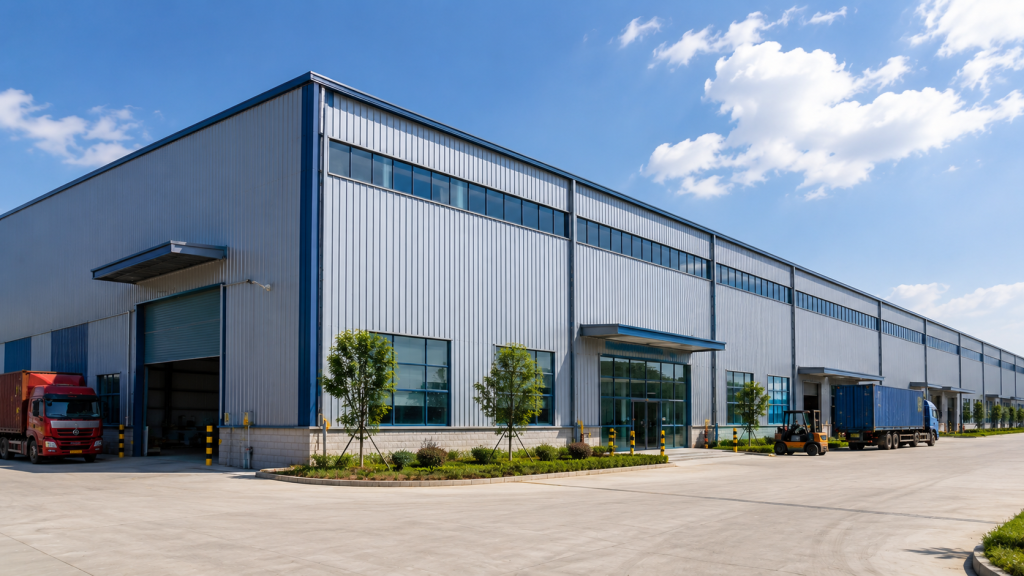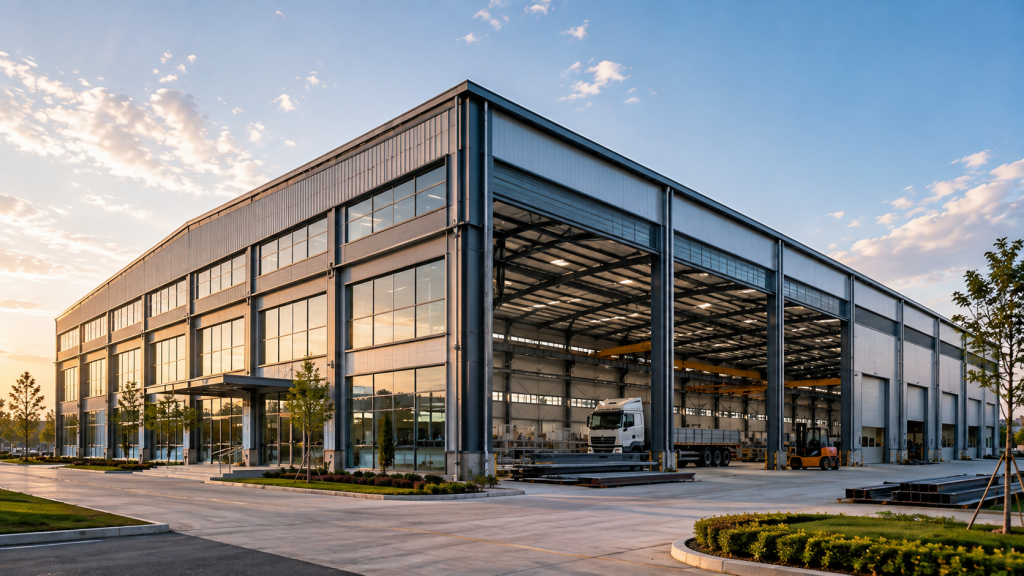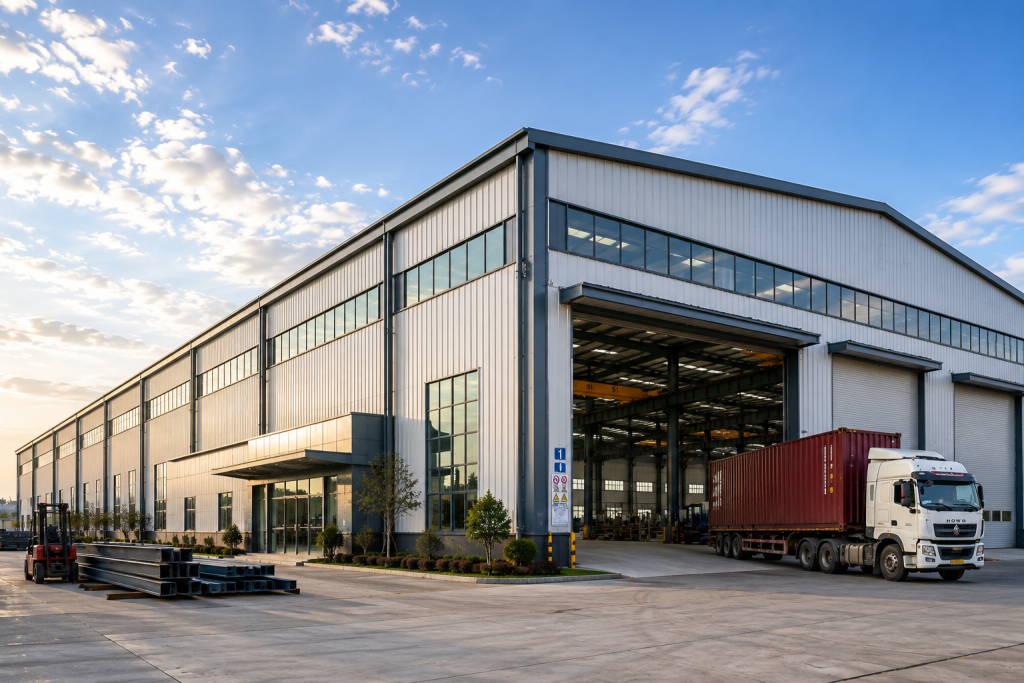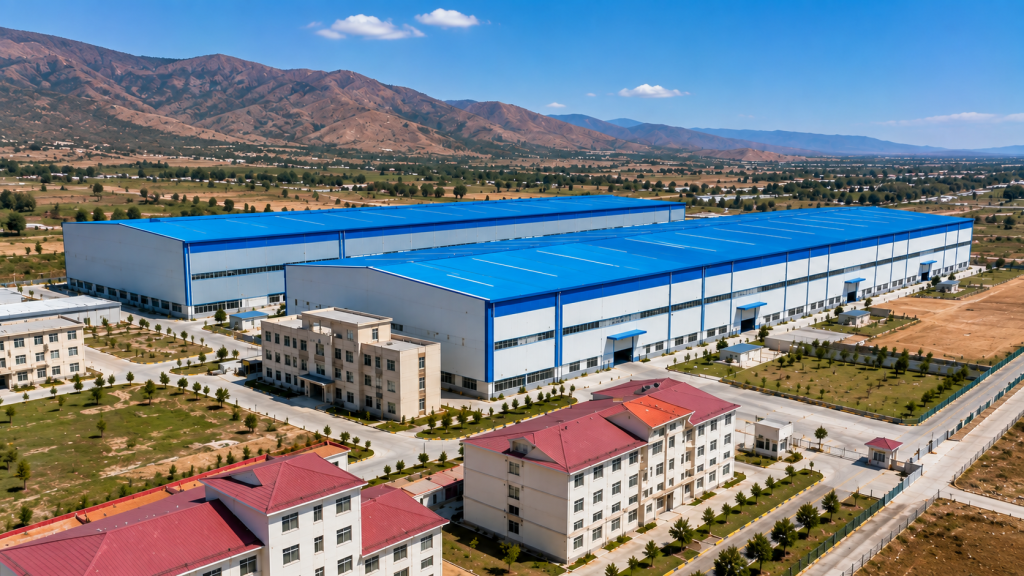
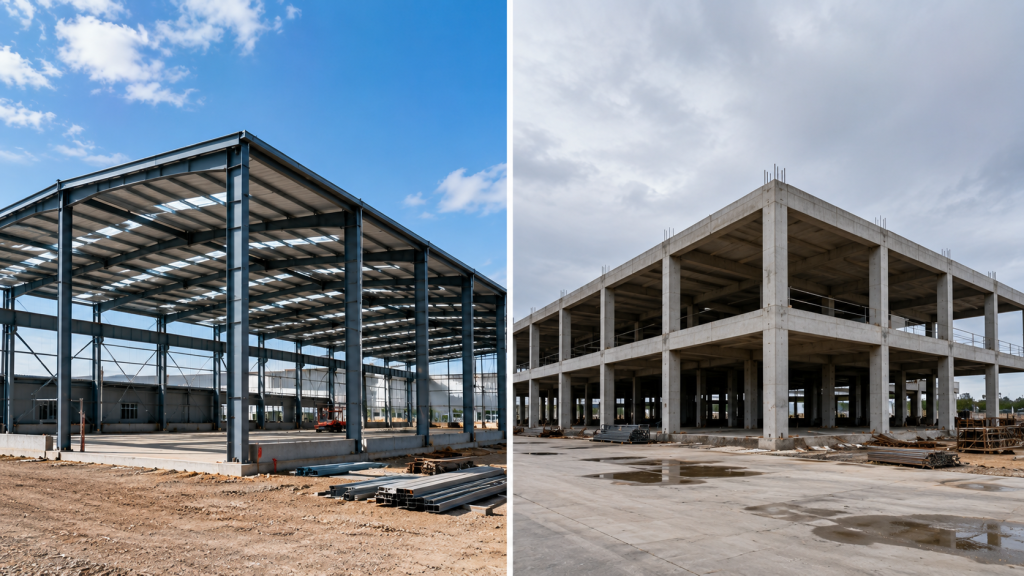
Steel Structure vs Concrete Building: What Is the Difference?
Steel structure and reinforced concrete are two of the most widely used structural systems for industrial, commercial and infrastructure projects.
Both systems can provide reliable structural performance when they are properly designed, but they differ significantly in construction speed, structural weight, span capability, fabrication method, foundation requirements, future expansion and project management.
For warehouses, workshops, factories, hangars and other industrial buildings, choosing between steel and concrete should depend on the actual project requirements rather than simply selecting the material with the lowest initial price.
As a steel structure manufacturer, Xinguangzheng works with industrial projects where structural design, prefabricated manufacturing and project delivery must be coordinated according to building use, location and engineering conditions.
Quick Comparison: Steel Structure vs Concrete Building
| Factor | Steel Structure | Concrete Building |
| Construction Speed | Generally faster due to prefabrication | Usually requires more on-site forming, reinforcement and curing |
| Structural Weight | Relatively lightweight | Heavier |
| Large-Span Capability | Well suited to large clear spans | Possible, but may require larger structural members or more columns |
| Factory Prefabrication | High degree of prefabrication | More site-based work in conventional construction |
| Foundation Loads | Lower structural self-weight can reduce foundation loads | Higher structural self-weight |
| Future Expansion | Often easier to modify or extend | Modification may be more complex |
| Fire Performance | May require additional fire protection depending on requirements | Concrete provides inherent fire resistance |
| Corrosion Protection | Requires suitable surface protection | Steel reinforcement inside concrete also requires durability consideration |
| On-Site Labor | Can be reduced through prefabrication | Generally more site-intensive |
1. Construction Speed
Construction speed is one of the most important differences between steel structures and conventional reinforced concrete buildings.
Steel structural components can be fabricated in a manufacturing facility while foundation and civil work are being prepared at the project site.
After the foundation is ready, prefabricated columns, beams, bracing and secondary steel members can be transported to the site and assembled according to the installation drawings.
Concrete construction usually requires several sequential processes, including formwork installation, reinforcement placement, concrete pouring and curing.
This does not mean every steel project will automatically be faster, because project complexity, local labor conditions, logistics and installation planning also affect the schedule. However, prefabrication can provide a significant advantage where rapid project delivery is important.
2. Structural Weight
Steel structures normally have a lower structural self-weight than reinforced concrete systems designed for similar building functions.
This can be important because the weight of the superstructure is transferred to the foundations.
A lighter structural system may reduce foundation reactions, although the final foundation design must still be based on local soil conditions, structural loads and geotechnical information.
For sites with difficult soil conditions, structural weight may become an important part of the overall engineering evaluation.
3. Large-Span Capability
Large clear spans are one of the major reasons steel structures are widely used for industrial buildings.
Warehouses, aircraft hangars, logistics centers, machinery workshops and manufacturing facilities often require large open spaces without excessive interior columns.
Steel beams, portal frames, trusses and other structural systems can be designed to provide large spans while maintaining relatively efficient structural weight.
Concrete structures can also achieve large spans, but larger sections, prestressed systems or additional columns may be required depending on the project.
For projects where unobstructed floor space is a major operational requirement, steel structure systems are often an attractive option.
4. Prefabrication and Manufacturing Quality
A major difference between steel and conventional concrete construction is the amount of work completed before materials reach the project site.
Steel columns, beams, plates and connection components can be cut, drilled, welded, inspected and surface-treated in a controlled manufacturing environment.
This factory-based production process can improve consistency and reduce the amount of fabrication required during erection.
Accurate component dimensions and bolt-hole positions are particularly important because prefabricated steel buildings depend on many individual components fitting together correctly during installation.
Concrete quality also depends heavily on material control and workmanship, but much of the conventional concrete construction process takes place directly at the site.
5. Foundation Requirements
The foundation should never be selected simply according to whether the building uses steel or concrete.
Foundation design depends on:
- Structural reactions
- Building height
- Wind loads
- Seismic loads
- Equipment loads
- Crane loads
- Soil bearing capacity
- Groundwater conditions
- Local engineering requirements
However, because steel structures are generally lighter than comparable reinforced concrete systems, the superstructure may create lower dead-load reactions.
The actual economic impact must be evaluated by the project engineers using local geotechnical information.
6. Industrial Building Flexibility
Industrial buildings frequently change during their service life.
A factory may need a new production line. A warehouse may require additional storage space. A workshop may need new equipment or an extension.
Steel structures can often provide greater flexibility for future expansion because structural members can be extended, reinforced or modified with appropriate engineering.
Bolted prefabricated construction may also simplify certain modifications compared with heavily integrated concrete structural systems.
Any structural modification still requires professional engineering review, particularly when changes affect loads, columns, beams, bracing or foundations.
7. Steel Structure vs Concrete for Warehouse Buildings
Warehouses usually require large floor areas, efficient internal circulation and relatively simple architectural layouts.
For these reasons, steel structures are widely used for warehouse construction.
Typical advantages include:
- Large clear internal areas
- Rapid prefabricated construction
- Flexible column spacing
- Easy integration with loading doors
- Potential for future expansion
- Efficient roof and wall enclosure systems
Concrete may still be appropriate for certain warehouses, especially where local materials, fire requirements, multi-storey construction or project-specific conditions favor reinforced concrete.
The decision should be based on the entire project rather than the structural frame alone.
8. Steel Structure vs Concrete for Industrial Workshops
Industrial workshops often include overhead cranes, heavy machinery, large doors and specialized equipment layouts.
Steel structures are particularly suitable when the building requires crane runway systems or large production spaces.
Crane brackets, runway beams and supporting columns can be incorporated into the steel structural design from the beginning.
For heavy industrial facilities, the engineering team must consider crane capacity, lifting height, operating frequency, dynamic loads and production requirements.
You can view examples of industrial steel applications in our steel structure projects section.
9. Steel Structure vs Concrete for Factory Buildings
Factory buildings vary significantly depending on the manufacturing process.
Some factories need wide, open production areas, while others require multiple floors, heavy equipment foundations or complex building services.
Steel structures can provide strong advantages for single-storey and large-span industrial factories because of their prefabrication and flexible structural layout.
For multi-storey factories, both steel and concrete may be suitable depending on floor loads, vibration requirements, fire protection, building height and local construction practices.
In some projects, hybrid systems combining steel and reinforced concrete may provide the most practical solution.
10. Fire Protection
Fire performance is an important consideration when comparing steel and concrete buildings.
Concrete has inherent fire resistance because of its material characteristics and mass.
Structural steel is non-combustible, but its strength can decrease at high temperatures. Depending on the building use and applicable regulations, steel members may require fire-resistant coatings, boards or other protection systems.
The appropriate fire protection solution should be selected according to the required fire rating, local codes and building application.
Neither structural system should be evaluated using a simple statement such as “steel is unsafe in fire” or “concrete needs no fire engineering.” The correct solution depends on professional fire and structural design.
11. Corrosion and Durability
Structural steel requires appropriate corrosion protection based on the environmental conditions of the project.
Possible factors include:
- Humidity
- Coastal exposure
- Industrial chemicals
- Temperature
- Condensation
- Building use
Surface preparation, paint systems or other specified treatments can be selected according to actual project requirements.
Concrete also requires durability engineering. Reinforcement corrosion, cracking, moisture penetration and environmental exposure can affect long-term performance if the structure is not properly designed and constructed.
The key issue is therefore not whether one material is maintenance-free, but whether the building system is designed for its actual service environment.
12. Seismic Performance
Steel has high strength and ductility, characteristics that can be useful in seismic structural systems.
However, good seismic performance depends on far more than material choice.
Frame configuration, bracing systems, connection design, building mass, structural regularity and local seismic requirements all influence performance.
Reinforced concrete structures can also perform well in seismic regions when properly detailed and designed.
For projects located in seismic zones, the structural system should always be selected based on applicable design standards and engineering analysis.
13. Construction Site Conditions
Project location can influence whether steel or concrete provides greater practical advantages.
Steel prefabrication may be particularly useful where:
- Site construction space is limited
- The construction schedule is tight
- Large spans are required
- Local site fabrication should be minimized
- The project is supplied internationally
Concrete may have advantages where local concrete materials and labor are readily available or where the project design strongly favors concrete structural systems.
For international projects, transportation and local installation resources should also be considered before selecting the final building system.
14. Shipping and International Projects
For overseas steel building projects, structural components can be prefabricated, packaged and transported to the destination country.
Shipping planning should consider:
- Component dimensions
- Total steel quantity
- Container utilization
- Roof and wall materials
- Loading sequence
- Destination port
- Local transportation limitations
Engineering and logistics should be coordinated before manufacturing so that structural members are practical to transport and assemble.
This prefabricated delivery model is one reason steel structures are commonly used for international industrial projects.
15. Which System Has a Lower Construction Cost?
There is no universal answer to whether steel or concrete is cheaper.
Total construction cost depends on the project location, structural design, material prices, labor costs, foundation requirements, construction schedule and building specifications.
A steel building may have a higher structural material cost in one market but save time and labor through prefabrication. In another project, locally available concrete and labor may make reinforced concrete more competitive.
Buyers should therefore compare total project cost rather than only the price of the structural frame.
Important cost components include:
- Structural materials
- Foundation construction
- Fabrication
- Transportation
- Site labor
- Lifting equipment
- Construction duration
- Fire protection
- Roof and wall systems
- Long-term maintenance
16. Construction Schedule Can Affect Total Project Cost
A faster building schedule may have financial value beyond direct construction expenses.
If a factory, warehouse or logistics facility can begin operation earlier, the owner may be able to start production, storage or distribution sooner.
This is one reason prefabricated construction can be attractive for commercial and industrial projects.
However, schedule advantages depend on proper engineering, manufacturing planning, foundation preparation, shipping and installation coordination.
17. Steel Structures for Future Expansion
Many industrial projects are developed in phases.
A company may initially construct one workshop or warehouse and add additional bays later as production grows.
Steel structural systems can be planned with future expansion in mind.
Possible future requirements may include:
- Additional building bays
- Extended warehouse length
- New crane systems
- Mezzanine floors
- Additional doors
- New equipment areas
If future expansion is expected, it should be discussed during the original engineering stage so that appropriate structural provisions can be considered.
When Should You Choose a Steel Structure?
A steel structure may be particularly suitable when a project requires:
- Large clear spans
- Rapid construction
- Factory prefabrication
- Industrial crane systems
- Flexible interior layouts
- Future expansion
- International delivery
- Large warehouse or workshop spaces
Applications commonly include warehouses, industrial workshops, factories, aircraft hangars, logistics centers, agricultural buildings and other large-span structures.
When Might Concrete Be More Suitable?
Concrete may be preferred where project requirements include:
- Specific fire-resistance requirements
- Heavy multi-storey floor systems
- High thermal mass requirements
- Strong local concrete supply and construction resources
- Structural layouts better suited to reinforced concrete
Many real projects also use a combination of materials rather than choosing only one.
For example, a steel superstructure may be supported by reinforced concrete foundations, while multi-storey industrial buildings may combine steel framing with concrete floor slabs.
How to Choose Between Steel and Concrete
Before choosing the structural system, project owners should evaluate:
- Building application
- Required span
- Building height
- Number of floors
- Crane and equipment loads
- Project location
- Wind and seismic conditions
- Fire requirements
- Available construction schedule
- Local labor and material conditions
- Future expansion plans
- Total project budget
The structural system should then be evaluated by qualified engineering professionals based on the complete project requirements.
Steel Structure Manufacturer for Industrial Projects
For industrial projects, successful steel construction requires coordination between structural engineering, manufacturing, quality control, shipping and installation.
Working with an experienced manufacturer can help connect these stages within a coordinated project process.
More information about Xinguangzheng’s steel structure manufacturing and project capabilities is available on our About Us page.
Conclusion
Steel structure and reinforced concrete are both proven construction systems, and neither is universally better for every project.
Steel structures offer strong advantages in prefabrication, construction speed, structural weight, large-span capability and future flexibility, making them particularly suitable for many warehouses, workshops, factories, hangars and industrial buildings.
Concrete can offer advantages in other situations, particularly where project-specific fire, floor-system or local construction conditions favor reinforced concrete.
The right decision should be based on building use, structural requirements, local conditions, construction schedule and total project economics.
Planning an industrial building and evaluating steel structure versus concrete? Contact our team with your project location, building dimensions, intended application and available drawings to discuss an appropriate structural solution.