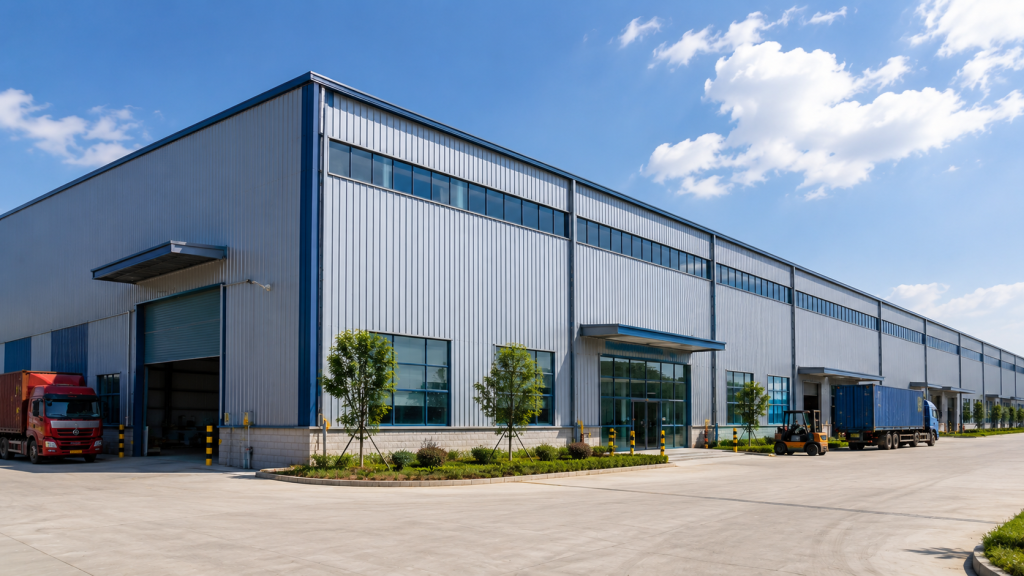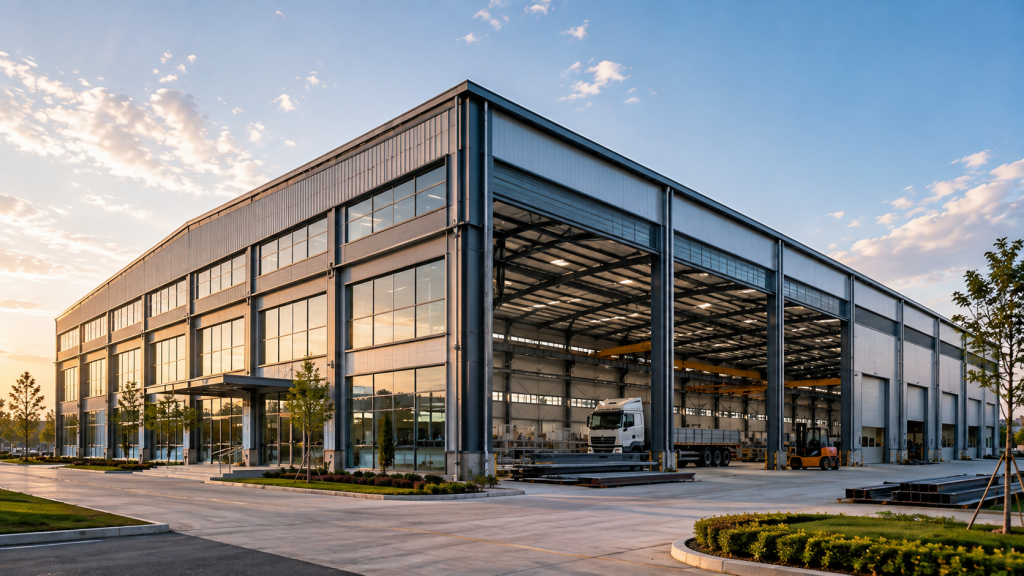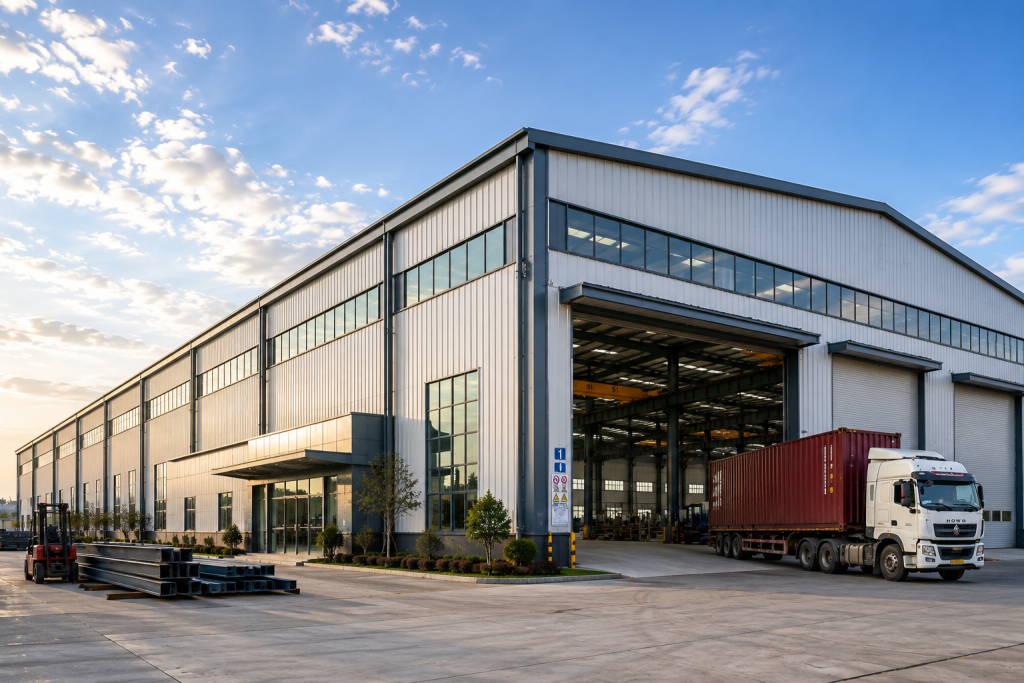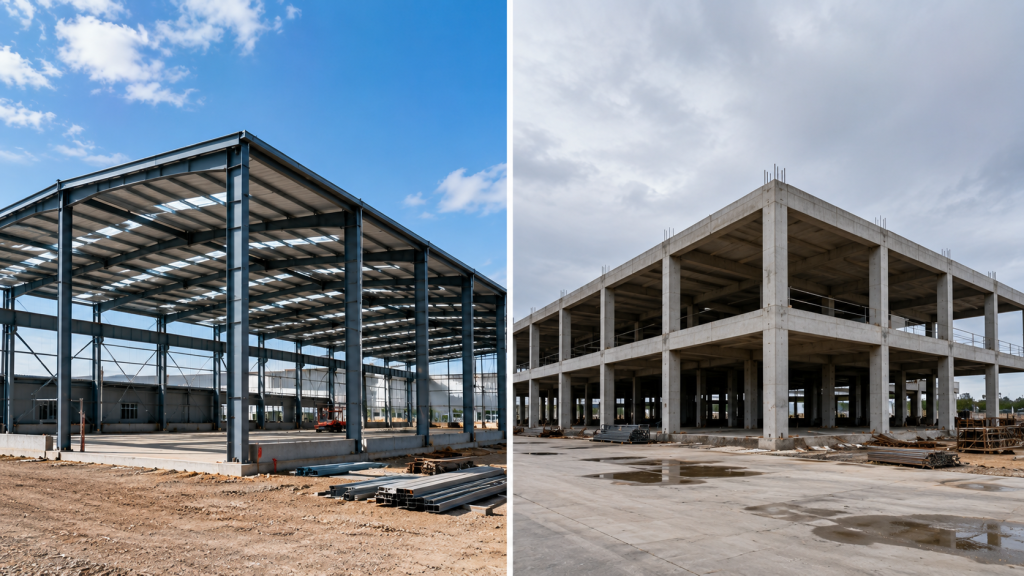
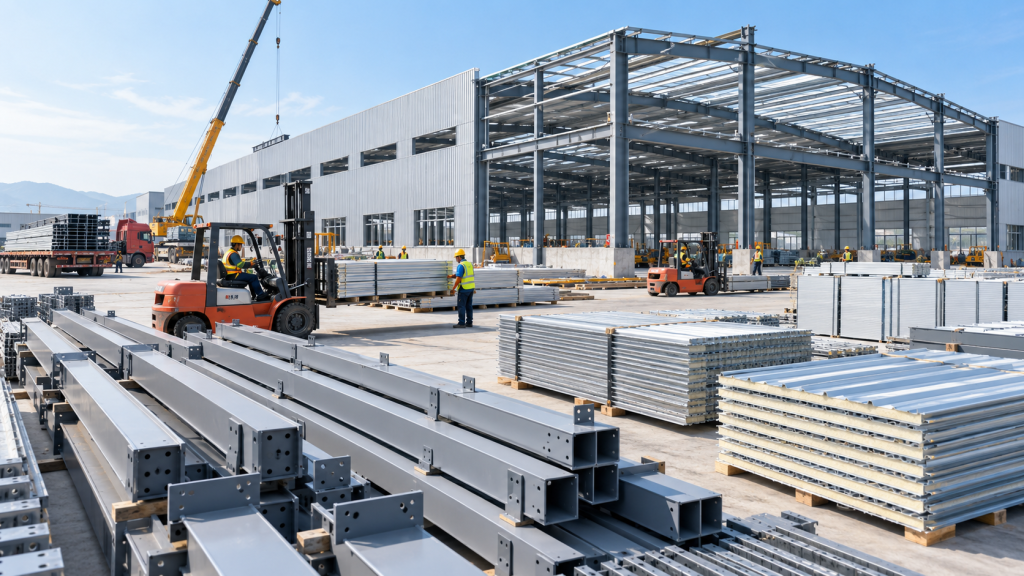
Choosing a prefabricated steel building manufacturer in China is an important decision for international buyers planning warehouses, factories, workshops, hangars, agricultural buildings or other industrial projects.
The lowest quotation does not necessarily represent the most suitable solution. Buyers should evaluate engineering capability, fabrication quality, project experience, technical communication, packing, international delivery and the manufacturer’s ability to coordinate the complete steel building project.
Xinguangzheng is a steel structure manufacturer in China providing customized steel building solutions for international projects. This guide explains what buyers should check before choosing a prefabricated steel building manufacturer and what information should be prepared before requesting a quotation.
Quick Answer: How Should You Choose a Prefabricated Steel Building Manufacturer in China?
International buyers should choose a manufacturer based on the complete project capability rather than price alone.
Before placing an order, check whether the manufacturer can support:
- Structural design and engineering coordination
- Customized building dimensions and applications
- Shop drawings and connection details
- Steel fabrication and quality control
- Roof and wall system coordination
- Crane and equipment requirements
- Packing and container loading
- International project delivery support
- Real completed overseas projects
A prefabricated steel building is not simply a collection of steel columns and beams. It is a complete structural system that must be designed, fabricated, transported and assembled according to the requirements of a specific project.
What Is a Prefabricated Steel Building?
A prefabricated steel building is a structure in which major steel components are manufactured in a factory before being transported to the construction site for assembly.
Depending on the project, the prefabricated components may include:
- Steel columns
- Steel beams or rafters
- Trusses
- Connection plates
- Purlins and girts
- Bracing systems
- Roof and wall supporting components
This manufacturing approach allows the main structural components to be produced under controlled factory conditions before international shipment.
However, the effectiveness of prefabrication depends heavily on design accuracy and manufacturing coordination. Errors in dimensions, connections or shop drawings can create expensive problems after the steel arrives at the site.
Step 1: Choose a Manufacturer Based on the Building Application
Different steel buildings require different engineering solutions.
A manufacturer experienced only with simple storage buildings may not necessarily be suitable for a large industrial workshop with cranes or a large-span aircraft hangar.
Before choosing a supplier, consider what type of building you need.
Steel Warehouse
A steel warehouse usually focuses on storage efficiency, internal logistics, loading access and usable floor area.
Industrial Workshop
A workshop may require production equipment, overhead cranes, specific column spacing and internal transportation routes.
Factory Building
Industrial factories may require coordination with production lines, equipment foundations, ventilation, material flow and future expansion.
Aircraft Hangar
Aircraft hangars often require large clear spans and large door openings, making structural and door-system coordination especially important.
Agricultural Steel Building
Agricultural buildings may require different ventilation, enclosure and operational arrangements depending on the application.
International buyers should therefore look for a manufacturer with documented project experience relevant to the intended building use.
Step 2: Evaluate Engineering Capability Before Comparing Prices
Steel buildings are customized engineering products.
Before fabrication begins, the manufacturer should understand the project location, dimensions, use, local technical requirements and operating conditions.
Important engineering information may include:
- Building length, width and height
- Required clear span
- Column spacing
- Project location
- Applicable design requirements
- Wind conditions
- Snow loads where applicable
- Seismic requirements where applicable
- Crane loads
- Equipment loads
- Roof and wall requirements
Two buildings with the same dimensions may require different structural solutions when they are located in different regions or used for different purposes.
This is why buyers should not compare quotations only by total steel quantity or price.
Step 3: Confirm Drawings Before Steel Fabrication Starts
One of the most important stages in a prefabricated steel building project is drawing confirmation.
Before production, the buyer and manufacturer should confirm the relevant technical information.
This may include:
- Architectural drawings
- Structural drawings
- Shop drawings
- Connection details
- Anchor bolt layouts
- Door and window openings
- Roof and wall details
- Crane arrangements
Shop drawings are particularly important because they translate the structural design into information that can be used during fabrication.
Unconfirmed openings, equipment positions or connection details can cause unnecessary modifications later in the project.
Step 4: Check the Manufacturer’s Fabrication Capability
After the drawings are approved, the project moves into steel fabrication.
International buyers should understand how the manufacturer controls the production process.
Typical fabrication stages may include:
- Raw material preparation
- Cutting
- Assembly
- Welding
- Drilling
- Component inspection
- Surface treatment
- Marking
- Packing
For prefabricated buildings, manufacturing accuracy is critical because components produced in the factory must later fit together correctly at the construction site.
A small dimensional error in the factory may become a much larger installation problem overseas.
Step 5: Review Quality Control Before Shipment
Quality control should be integrated into the manufacturing process rather than performed only at the end.
Important inspection points may include:
- Material specifications
- Component dimensions
- Welding quality
- Bolt-hole positions
- Connection plates
- Surface treatment
- Component identification
- Final packing condition
For overseas projects, resolving issues during factory production is normally more efficient than making corrections after components have already been shipped.
Step 6: Understand the Roof and Wall System
A prefabricated steel building includes more than its primary frame.
The roof and wall enclosure also needs to match the building use and local requirements.
Depending on the project, buyers may need to discuss:
- Single-layer steel sheets
- Insulated sandwich panels
- Roof insulation
- Wall insulation
- Skylight panels
- Ventilation openings
- Doors and windows
- Waterproofing details
A warehouse, cold storage building and industrial workshop may require very different enclosure systems even if their main steel frames are similar.
Step 7: Consider Cranes and Industrial Equipment Early
If the building requires overhead cranes or heavy production equipment, this information should be provided before structural design and fabrication.
The manufacturer may need to consider:
- Crane capacity
- Lifting height
- Crane runway beams
- Column loads
- Equipment layout
- Maintenance access
Adding crane requirements after the main structure has already been designed may require significant structural changes.
Xinguangzheng’s documented 8,800 m² paint workshop project in Thailand, for example, includes four 5-ton overhead cranes and provides a practical reference for an industrial steel workshop where the building structure and crane system need to be coordinated.
View the Thailand Steel Structure Paint Workshop Project
Step 8: Evaluate Packing and International Shipping
International buyers also need to consider how prefabricated steel components will be transported from China to the project country.
Packing and loading should be planned according to:
- Component dimensions
- Container limitations
- Loading sequence
- Transportation protection
- Component marking
- Destination unloading conditions
Large structural components may need to be divided into transportable sections while maintaining the required connection arrangement for site assembly.
A clear marking system is also important because it helps the installation team identify components after arrival.
Step 9: Plan Installation Before Ordering
The installation method should be discussed before the steel structure is shipped.
International buyers should clarify:
- Who will perform the installation
- What installation drawings will be provided
- Whether technical guidance is required
- What lifting equipment is available locally
- How components will be stored on site
- How installation sequencing will be organized
The appropriate installation arrangement depends on the project location, local contractor capability and the complexity of the steel structure.
Manufacturer vs. Trading Company: What Should Buyers Check?
When searching for a prefabricated steel building supplier in China, buyers may encounter manufacturers, exporters, engineering companies and trading companies.
The most important question is not simply how the company describes itself, but what project functions it can actually support.
Buyers should verify:
- Who is responsible for engineering coordination
- Where the steel components are fabricated
- How quality control is managed
- Who prepares technical drawings
- Who communicates design changes
- Who manages packing and delivery coordination
Clear responsibility throughout the project helps reduce communication gaps.
Real Projects Are More Useful Than General Claims
When evaluating a prefabricated steel building manufacturer in China, documented projects can provide more useful information than general marketing statements.
Buyers should review projects that show:
- Building application
- Project location
- Building dimensions or area
- Structural system
- Special project requirements
- Real project photographs
Xinguangzheng maintains documented international projects across different steel building applications.
Steel Structure Warehouse Project in Panama
The Panama warehouse project uses a steel portal frame system and has dimensions of approximately 100 m × 50 m × 15 m.
The project includes a partial mezzanine office, multiple roller shutter doors and an insulated roof and wall system.
View the Panama Steel Structure Warehouse Project
8,800 m² Paint Workshop in Thailand
The Thailand industrial workshop measures approximately 160 m × 55 m × 9 m, with a total area of approximately 8,800 m².
The portal steel frame workshop includes four 5-ton overhead cranes, showing the importance of integrating production requirements into structural design.
13,759 m² Brick Factory in Algeria
Xinguangzheng’s brick factory project in Oran, Algeria consists of two industrial steel workshops with a combined area of approximately 13,759 m².
The project provides another practical example of a steel structure solution designed around industrial production requirements.
Explore more completed projects:
Xinguangzheng Steel Structure Projects
How Xinguangzheng Supports Prefabricated Steel Building Projects
For international steel building projects, the relationship between design, fabrication and delivery is especially important.
Xinguangzheng supports customized steel structure projects through a process that may include:
- Project requirement communication
- Engineering coordination
- Drawing confirmation
- Steel component fabrication
- Quality control
- Component marking and packing
- International delivery support
The exact project scope depends on the building type, location and customer requirements.
The objective is to coordinate the structural solution with the actual use of the building rather than treating every steel building as a standard product.
What Information Should You Send Before Requesting a Quote?
If you plan to buy a prefabricated steel building from China, preparing the following information can make the initial evaluation more efficient:
- Project location: Country and city
- Building application: Warehouse, factory, workshop, hangar or other use
- Building dimensions: Length × width × height
- Required clear span: If applicable
- Crane requirements: Capacity and lifting height
- Roof and wall requirements: Insulation or cladding preferences
- Door and window requirements: Sizes and quantities if available
- Local design requirements: Wind, snow, seismic or applicable codes
- Existing drawings: Architectural or conceptual drawings if available
If complete drawings are not yet available, buyers can still begin by providing the project location, building use and approximate dimensions.
Frequently Asked Questions
Can I buy a customized prefabricated steel building from China?
Yes. Steel buildings can be customized according to the project location, building dimensions, intended use, structural requirements and technical specifications.
What types of prefabricated steel buildings can Xinguangzheng provide?
Xinguangzheng’s documented project portfolio includes warehouses, workshops, factories, aircraft hangars, agricultural buildings and other customized steel structure applications.
What should I provide before requesting a quotation?
Project location, building use, length, width, height and any available information about cranes, equipment, local design requirements and drawings are useful starting points.
Why are shop drawings important for prefabricated steel buildings?
Shop drawings help translate structural requirements into detailed fabrication information, including component dimensions, connections and other production details.
Should I choose the lowest-priced steel building supplier?
Price is only one factor. Buyers should also evaluate engineering capability, project experience, fabrication quality, technical communication and delivery support.
Can prefabricated steel buildings be shipped internationally?
Steel components can be fabricated in China and prepared for international transportation, with packing and component dimensions coordinated according to the project and shipping requirements.
Choose a Manufacturer Based on the Complete Project
Choosing a prefabricated steel building manufacturer in China should be based on more than a single quotation.
The manufacturer needs to understand the building application, structural requirements, production process, shipping conditions and installation plan.
International buyers should therefore evaluate engineering capability, fabrication quality, real project experience and project support together.
For buyers looking for a prefabricated steel building manufacturer in China, Xinguangzheng provides customized steel structure solutions for different industrial and commercial applications.
Planning to Buy a Prefabricated Steel Building from China?
Send Xinguangzheng your project location, building application, dimensions and available drawings for an initial project discussion.
WhatsApp: +86 178 0625 1079