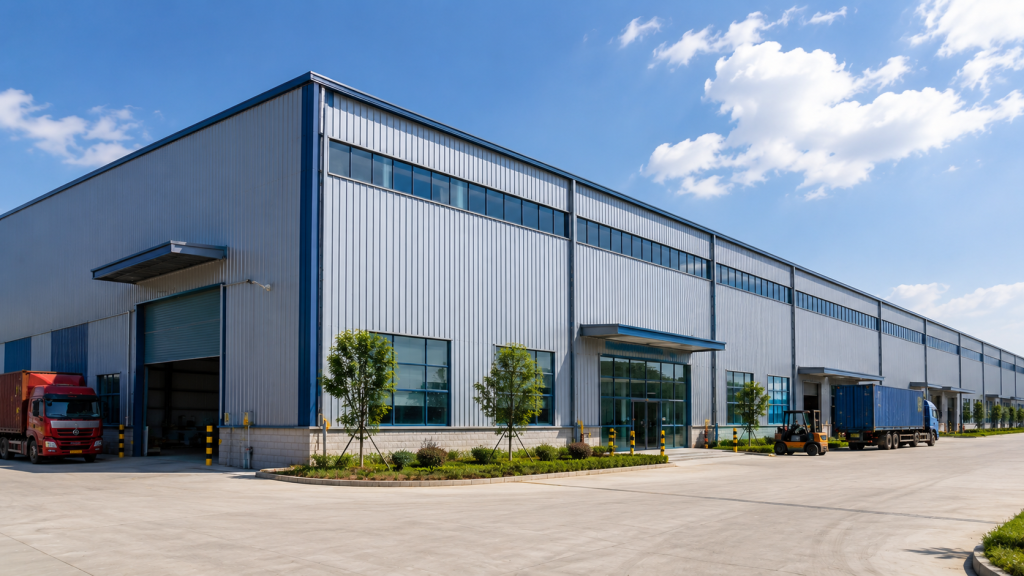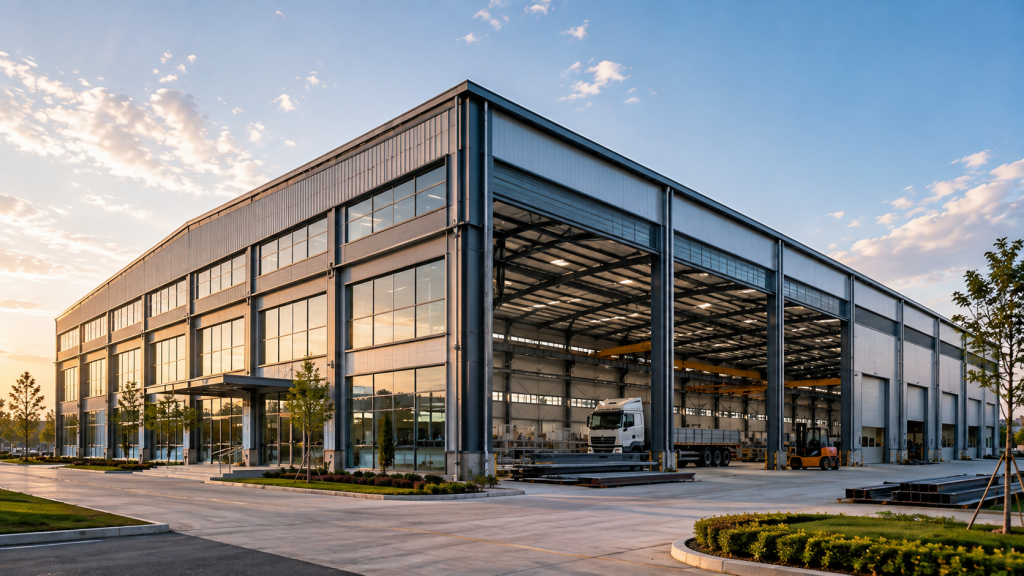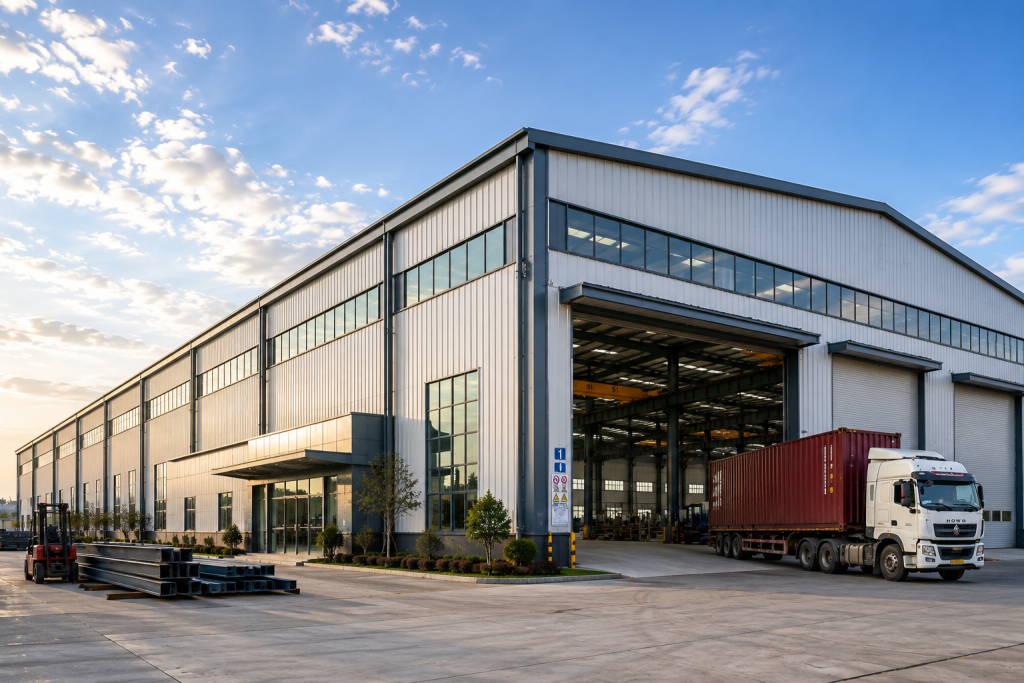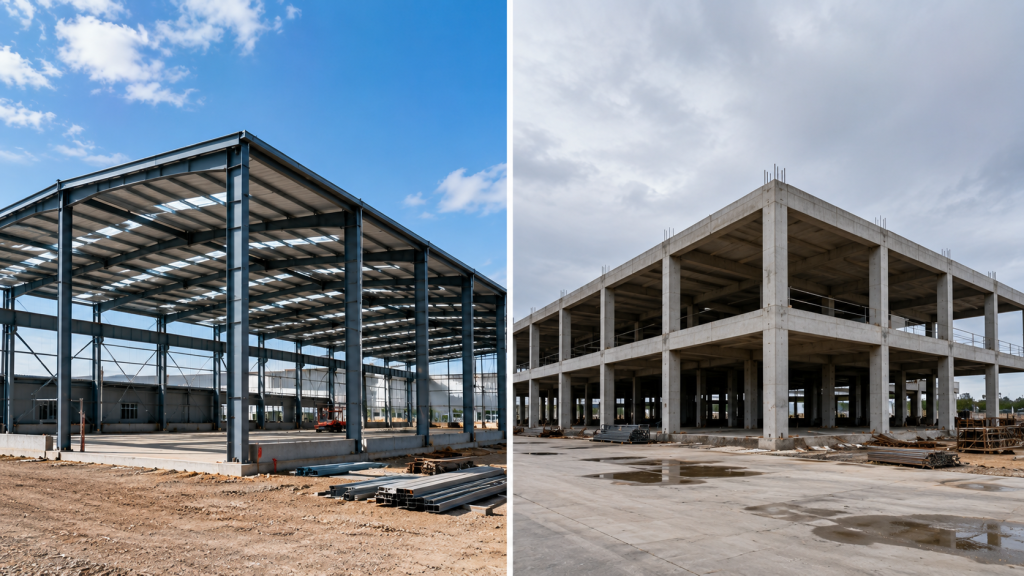
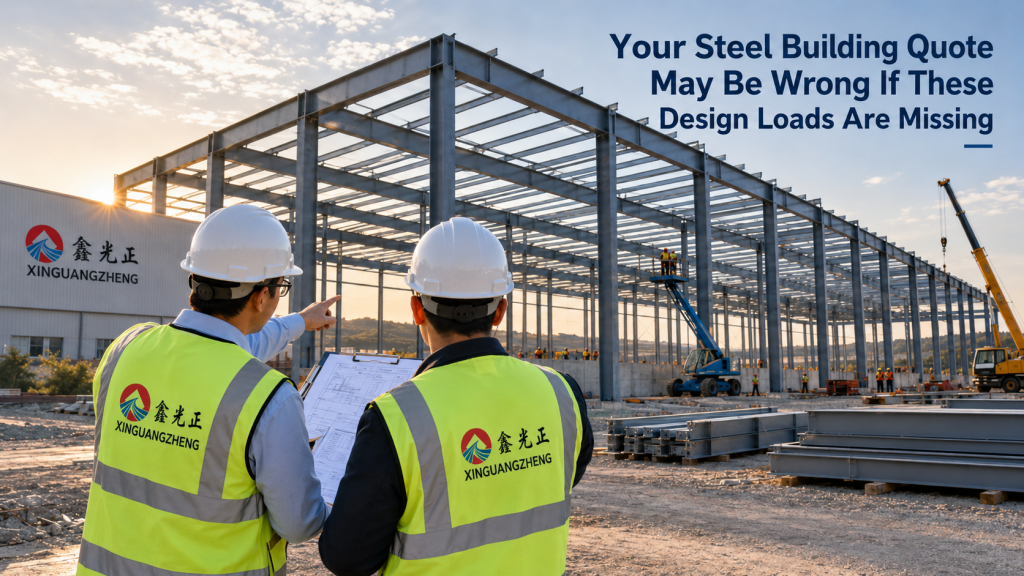
You send the same steel building dimensions to three suppliers and receive three very different quotations.
One supplier appears much cheaper than the others.
But before assuming that you have found the best price, there is a more important question to ask:
Did all three suppliers design the building using the same loads and design conditions?
A steel building quotation is not determined by length, width and height alone. Wind, snow, seismic conditions, cranes, mezzanines, equipment, solar panels and other loads can all affect the structural design.
If these requirements are missing from the request for quotation, different suppliers may make different assumptions.
The result is simple: two quotations that look comparable may actually represent two different steel buildings.
For international buyers, this is one of the most important risks to understand before comparing steel structure prices.
Xinguangzheng works with international steel structure projects involving engineering, manufacturing and project coordination. From a procurement perspective, confirming the design basis before comparing quotations can prevent serious misunderstandings later in the project.
Why Building Size Alone Is Not Enough for a Reliable Steel Structure Quote
Many initial inquiries begin with information such as:
- Length: 100 m
- Width: 50 m
- Eave height: 8 m
- Application: warehouse
This information is useful, but it is not enough to define the structural requirements of the building.
Consider two warehouses with exactly the same dimensions.
One may be located in an area with relatively moderate wind conditions and no snow. The other may be located in a region exposed to stronger winds, snow accumulation or significant seismic requirements.
Although the architectural dimensions are identical, the structural requirements may be different.
That can affect:
- Column sizes
- Rafter sizes
- Bracing systems
- Connection details
- Base plates
- Anchor bolts
- Secondary steel members
- Foundation reactions
- Total steel consumption
This is why steel building quotations should be compared based on the same design assumptions, not only the same building dimensions.
1. Wind Load
Wind is one of the most important design considerations for many steel buildings.
A large warehouse, workshop or hangar presents a significant surface area to the wind. Wind can create pressure and suction on walls and roofs and can influence the forces acting on the structural frame, bracing and connections.
The required wind design depends on project-specific conditions, which may include:
- Project location
- Applicable design code
- Basic wind speed or other code-defined wind parameters
- Building height
- Building geometry
- Terrain and exposure conditions
- Openings in the building envelope
- Local environmental conditions
If the project location is not provided, a supplier may have to make an assumption.
If Supplier A assumes a lower wind requirement while Supplier B designs according to more demanding local conditions, Supplier A may naturally produce a lower quotation.
That does not automatically mean Supplier A is more competitive. The two suppliers may simply be pricing different structural requirements.
2. Snow Load
For projects in regions that experience snow, roof snow load can have a major influence on structural design.
The roof structure must be designed according to the applicable project requirements and local conditions.
Snow-related design may need to consider factors such as:
- Local snow conditions
- Roof slope
- Building geometry
- Snow accumulation or drifting conditions where applicable
- Applicable local design standard
A warehouse in a warm climate may have little or no snow requirement, while a building of exactly the same size in a colder region may need to support significant additional roof loading.
If snow requirements are missing from the RFQ, the resulting price may not represent the final structure required for the actual site.
3. Seismic Design Requirements
Seismic requirements can also affect the structural system, connections, bracing and overall engineering solution.
Not every project has the same earthquake-design requirements.
Relevant information may include:
- Project location
- Applicable seismic design code
- Site or soil information required by the engineer
- Building use and importance category where applicable
- Structural system
For buyers, the key lesson is not to calculate seismic loads themselves.
The important step is to provide the correct project location and applicable local engineering requirements so that the responsible structural team can determine the design basis.
If one supplier includes seismic requirements and another does not, their prices should not be compared as if the structural scope were identical.
4. Roof Live Load and Maintenance Requirements
The roof of a steel building is not designed only for its own weight.
Depending on the applicable design standard and intended use, additional roof loads may need to be considered.
These can include code-required live loads and project-specific maintenance requirements.
Even when the roof does not normally carry permanent equipment, the design still needs to follow the relevant structural requirements.
Buyers should therefore avoid assumptions such as:
“Nobody will stand on the roof, so there is no roof load.”
The correct design loads must be determined according to the applicable engineering standard and project conditions.
5. Overhead Crane Loads
For steel workshops and industrial buildings, overhead cranes are one of the most important items to confirm before requesting a serious quotation.
A statement such as “the building will have a crane” is usually not sufficient.
The structural team may need information such as:
- Crane capacity
- Number of cranes
- Crane span
- Crane type
- Lifting height
- Runway level
- Crane manufacturer information when available
- Wheel loads or other technical data when required
A crane affects more than the crane beam itself.
Depending on the project, crane forces may influence:
- Main columns
- Crane brackets
- Runway beams
- Connections
- Bracing
- Foundation reactions
This is why a workshop designed without a crane cannot simply be assumed to be equivalent to the same workshop with a crane added later.
6. Mezzanine Floor Loads
Mezzanines are common in factories, warehouses and commercial steel buildings.
But the phrase “we need a second floor” is not enough for structural pricing.
The intended use matters.
A mezzanine used for offices may have different loading requirements from one used for:
- Heavy storage
- Production equipment
- Raw materials
- Finished goods
- Mechanical systems
Before pricing, the project team should clarify:
- Mezzanine area
- Floor elevation
- Intended use
- Required design load
- Equipment loads if applicable
- Stair and access requirements
If the final mezzanine load is significantly higher than the assumption used during quotation, beams, columns, connections and foundations may need to change.
7. Machinery and Equipment Loads
Industrial steel buildings often contain machinery that creates loads not obvious from the architectural layout.
Examples may include:
- Production equipment
- Tanks
- Mechanical units
- Piping support systems
- Conveyors
- Suspended equipment
- Special process equipment
Some equipment may create concentrated loads rather than evenly distributed loads.
Others may require dedicated support structures or coordination with the main steel frame.
If major equipment is known during the quotation stage, buyers should provide its location and available technical information as early as possible.
Waiting until fabrication has already started can turn what should have been an engineering input into a costly project change.
8. Solar Panel Loads
More industrial building owners are considering rooftop photovoltaic systems.
One common mistake is to treat solar panels as something that can always be added later without affecting the structural design.
A solar installation may introduce additional permanent loads and may also influence wind-related design considerations depending on the system and project conditions.
If solar panels are planned now or likely to be installed in the future, this should be communicated during the structural design stage.
The engineering team can then evaluate the relevant requirements as part of the project instead of discovering them after fabrication.
9. Suspended Loads and Building Services
Not every important load sits on the floor or roof.
Industrial buildings may also have items suspended from structural members.
Depending on the project, these could include:
- Mechanical services
- Pipes
- Cable trays
- Ductwork
- Lighting systems
- Fire protection systems
- Ceilings
- Other suspended equipment
Individual items may appear relatively small, but the combined requirement should not simply be ignored.
Known permanent or suspended loads should be communicated to the engineering team so that they can determine how they need to be considered.
10. Special Operational Loads
Some projects have requirements that do not fit neatly into a standard warehouse quotation.
Examples may include:
- Special industrial equipment
- Material handling systems
- Large doors
- Special suspended systems
- Future building extensions
- Special storage systems
- Process-specific structures
The more specialized the building application becomes, the more dangerous it is to rely on a simple price-per-square-meter comparison.
A serious quotation should reflect the actual project requirements.
Why a Cheaper Steel Building Quote May Not Actually Be Cheaper
Suppose three manufacturers receive the same basic request:
“Please quote a 5,000 m² steel warehouse.”
Supplier A assumes basic structural conditions and excludes several project-specific loads.
Supplier B asks for the exact project location, local design requirements and future rooftop solar system.
Supplier C includes different wall panels, another steel grade and a different corrosion protection system.
The three prices may be significantly different.
But the buyer is not really comparing three prices for one building.
The buyer may be comparing three different technical scopes.
This creates a common procurement mistake:
Comparing the final number before comparing what is behind the number.
What Happens If Important Loads Are Discovered After the Quote?
If missing information is identified during detailed engineering, the structural solution may need to change.
Depending on the project, this may affect:
- Steel member sizes
- Steel tonnage
- Connections
- Bracing
- Crane systems
- Base plates
- Anchor bolts
- Foundation reactions
- Material quantities
- Final project price
This does not necessarily mean that the original supplier intentionally provided an incorrect price.
In many cases, the original quotation was based on incomplete information or preliminary assumptions.
The problem occurs when a preliminary quotation is treated as if it were a final engineered price.
Preliminary Quote vs Final Engineered Quote
International buyers should understand the difference between an early budget quotation and a quotation based on sufficiently defined engineering requirements.
Preliminary Quotation
A preliminary quotation may be useful during early project planning when some technical information is not yet available.
However, assumptions should be clearly identified.
More Developed Project Quotation
As project information becomes clearer, the quotation can be refined according to confirmed requirements such as:
- Project location
- Applicable design code
- Building dimensions
- Wind requirements
- Snow requirements
- Seismic requirements
- Crane information
- Mezzanine loads
- Equipment loads
- Roof and wall system
- Corrosion protection
- Other project-specific requirements
The closer the design basis is to the real project, the more meaningful the quotation comparison becomes.
How Buyers Should Compare Steel Building Quotes
Instead of asking only:
“Which supplier has the lowest total price?”
buyers should first ask:
“Are these suppliers pricing the same design requirements?”
A practical comparison should review at least the following areas:
- Building dimensions
- Project location
- Design standard
- Wind design basis
- Snow design basis where applicable
- Seismic design basis where applicable
- Crane requirements
- Mezzanine requirements
- Equipment and special loads
- Solar panel requirements
- Steel grade
- Roof and wall specifications
- Surface treatment
- Supply scope
- Engineering scope
- Shipping terms
Only after these major items are aligned does the price comparison become more meaningful.
A Practical Design Load Checklist Before Requesting a Quote
International buyers do not need to perform structural calculations themselves.
However, they should provide enough information for the engineering team to establish the correct design basis.
Before requesting a quotation, prepare as much of the following as possible:
- Project country and exact location
- Building use
- Length, width and height
- Applicable local design standard if already specified
- Known wind design requirements
- Known snow requirements
- Known seismic requirements
- Crane capacity and technical information
- Mezzanine area and intended use
- Major equipment loads
- Future solar panel plans
- Other suspended or special loads
If some information is not available, tell the supplier instead of leaving the subject completely unmentioned.
The engineering team can then identify which data still needs to be confirmed.
For a broader RFQ preparation checklist, see our guide on what information buyers should prepare before requesting a steel structure building quote.
Do Not Let Different Design Assumptions Decide the Supplier for You
A low quotation can be attractive, especially during the early procurement stage.
But a lower number has limited meaning if the structural design basis is different.
For example:
- One quotation may include crane loads while another does not.
- One may include future solar panel loads while another assumes an empty roof.
- One may be based on confirmed local wind conditions while another uses a preliminary assumption.
- One may include seismic requirements while another has not yet considered them.
The buyer should identify these differences before making a supplier decision.
This protects both the buyer and the manufacturer from disputes later in the project.
Design Loads Also Affect Shop Drawings and Fabrication
The design basis does not stop being important after the quotation stage.
Confirmed structural requirements eventually flow into detailed engineering, connections and fabrication documents.
If critical project requirements change later, the effect may extend into shop drawings and manufactured components.
Before fabrication begins, project teams should therefore review the latest approved documents carefully. Our related article explains 12 items buyers should check in steel building shop drawings before fabrication.
Project Location Should Be One of the First Questions
For an international steel structure manufacturer, knowing the project country is useful, but the actual project location is even more important.
Design conditions may vary significantly within the same country.
The structural engineering process therefore needs project-specific information rather than assumptions based only on a country name.
When requesting a quotation, buyers should provide the real construction location whenever possible.
The Goal Is Not to Make the Building Heavier
It is important to understand that responsible structural design is not about using as much steel as possible.
Nor is competitive pricing about making the structure as light as possible.
The goal is to develop a structural solution appropriate for the actual project requirements, applicable standards and agreed scope.
An efficient steel building should balance structural requirements, material use, fabrication, transportation and project practicality.
That evaluation should be performed by qualified engineering professionals using the confirmed project design basis.
What Buyers Should Ask a Steel Structure Supplier
Before comparing final quotations, buyers can ask suppliers several practical questions:
- What design code is the quotation based on?
- What wind conditions were assumed?
- Was snow considered where applicable?
- What seismic requirements were considered?
- Are crane loads included?
- Are mezzanine loads included?
- Are equipment loads included?
- Has a future solar system been considered?
- Which project requirements are still assumptions?
- Which information must be confirmed before final engineering?
These questions can reveal much more about a quotation than the price alone.
From Quotation to a Buildable Steel Structure
A steel building quotation is only one stage of a much larger project process.
A successful international steel structure project normally requires coordination between:
- Project requirements
- Structural engineering
- Detailed drawings
- Fabrication
- Quality control
- Component identification
- Logistics
- Foundation coordination
- Site erection
Problems created by incomplete information during the quotation stage can continue into later stages if they are not identified early.
This is why procurement and engineering should not be treated as completely separate activities.
You can explore different building applications and international experience in our steel structure projects section.
Work With a Manufacturer That Asks the Right Questions
When a steel structure supplier asks for project location, design conditions, crane specifications or equipment information, those questions are not unnecessary complications.
They help define what the building actually needs to be.
A useful quotation should gradually move from assumptions toward confirmed project requirements.
Learn more about Xinguangzheng’s steel structure manufacturing and project capabilities.
Conclusion
Two steel building quotations cannot be meaningfully compared if they are based on different design loads.
Wind, snow, seismic requirements, roof loads, cranes, mezzanines, equipment, solar panels and other project-specific loads may influence the structural solution and final price.
For buyers, the most important lesson is simple:
Do not compare the price until you understand the design basis behind the price.
Providing accurate project information early helps manufacturers prepare more relevant proposals and reduces the risk of major structural or price changes later.
If you are planning a warehouse, workshop, factory, hangar or other steel structure project, contact our team with your project location, dimensions, application and known design requirements for further evaluation.