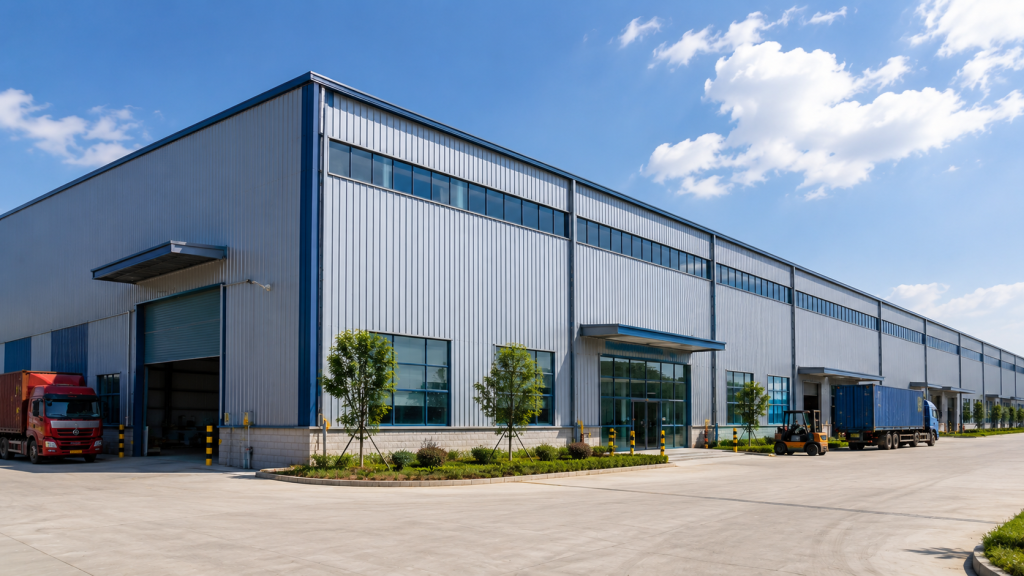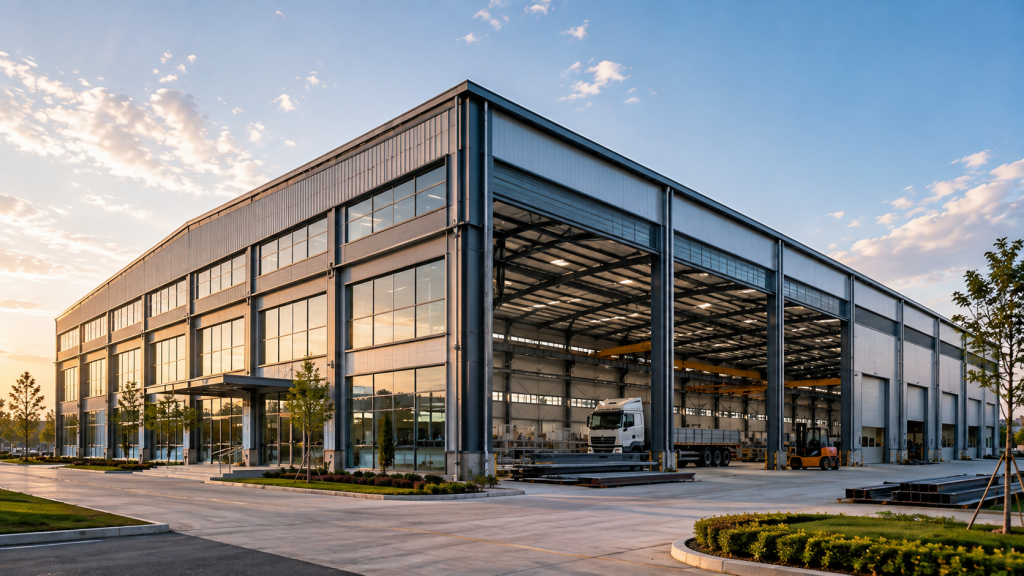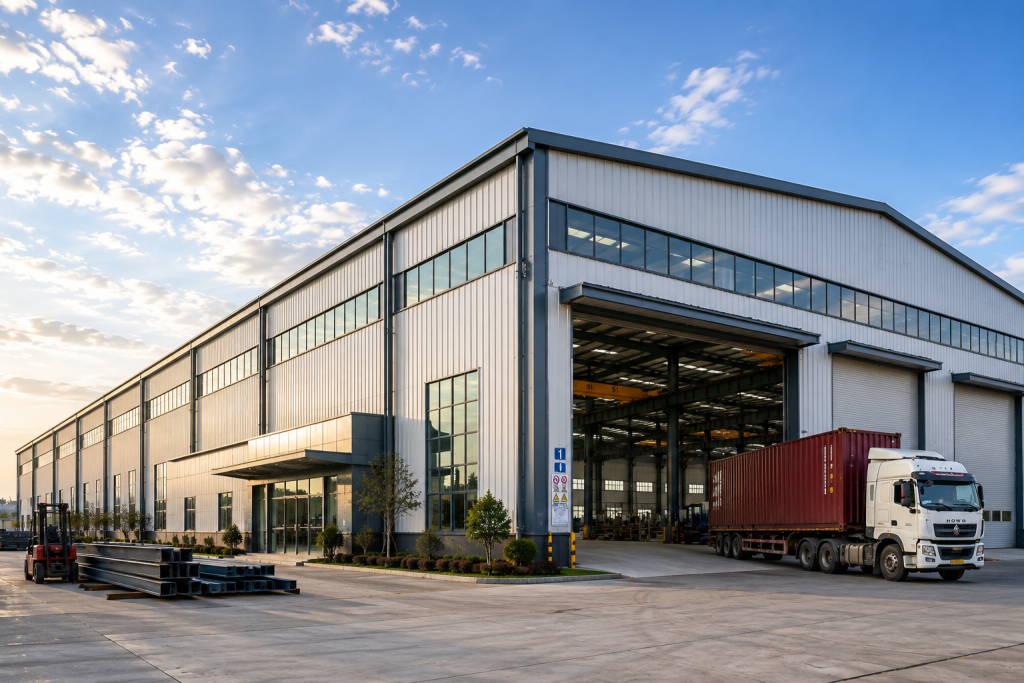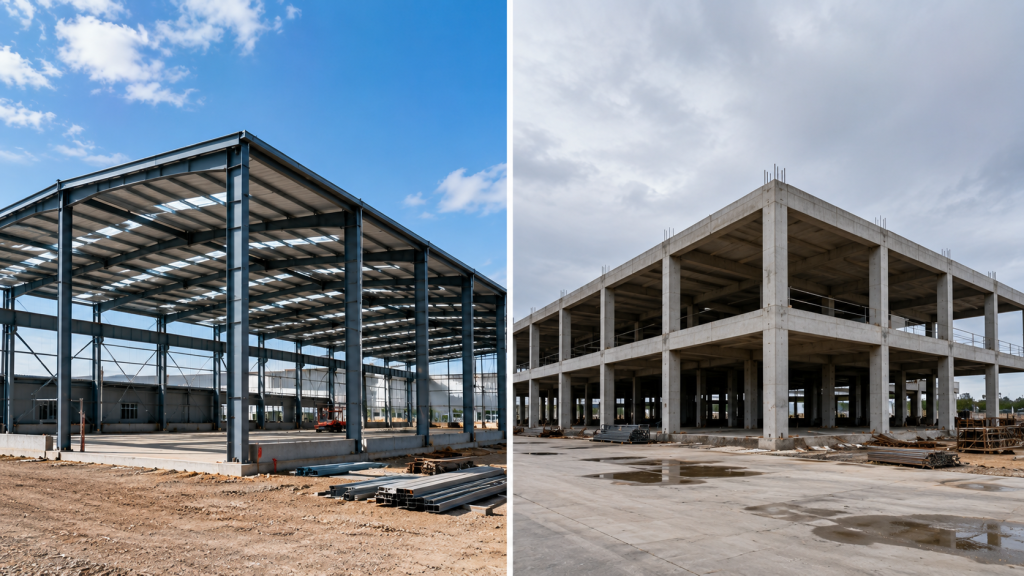
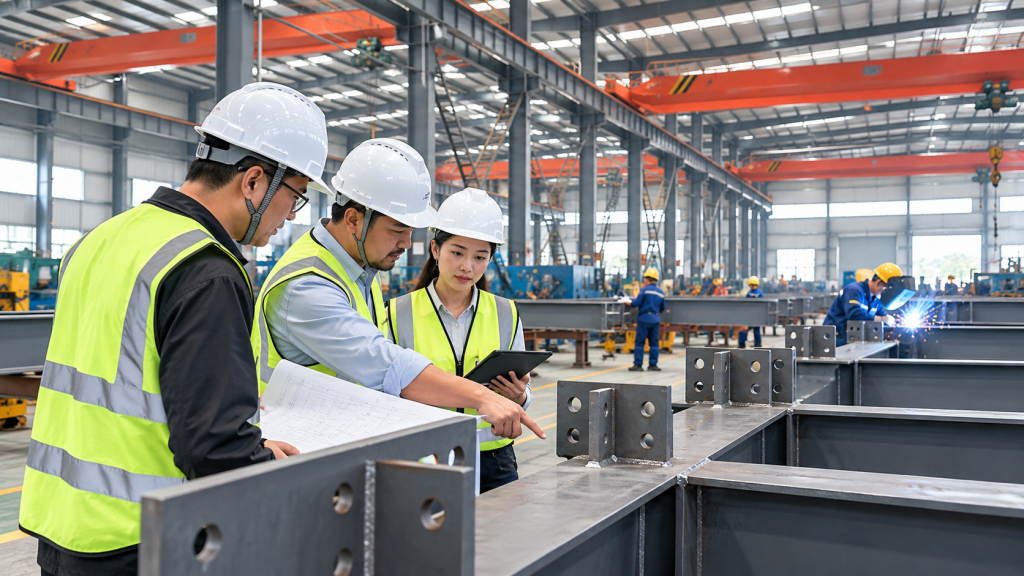
When an international buyer reaches the factory-audit stage, the steel structure project is usually no longer a general inquiry.
The buyer may already have drawings, quotations, technical discussions and a shortlist of potential suppliers.
At this point, visiting or auditing the factory is not simply about seeing how large the workshop is.
The real purpose is to verify whether the manufacturer can control the complete process from drawings and materials to fabrication, inspection, identification, packing and delivery.
For a steel structure project, a factory audit should therefore focus on evidence.
What should you check before placing an order?
This guide from Xinguangzheng explains 12 areas international buyers can review when evaluating a steel structure manufacturer.
Quick Answer: What Should Buyers Check During a Steel Structure Factory Audit?
A practical factory audit should normally review:
- Drawing and document control
- Raw material identification
- Cutting and material preparation
- Assembly and fit-up
- Welding control
- Dimensional inspection
- Hole and connection accuracy
- Surface preparation and coating
- Component identification and traceability
- Quality inspection records
- Packing and container preparation
- Project communication and delivery coordination
The objective is not simply to determine whether a factory “looks professional.”
The objective is to understand whether the manufacturer has a repeatable process for turning approved project information into correctly fabricated and deliverable steel components.
1. Check How Drawings and Revisions Are Controlled
Steel structure fabrication begins with drawings.
Before checking welding machines or production lines, buyers should understand how the manufacturer controls:
- Structural drawings
- Shop drawings
- Fabrication drawings
- Connection details
- Material lists
- Drawing revisions
- Approved changes
This is especially important when a project changes during design development.
If the buyer changes a door position, crane requirement, building dimension or connection detail, the factory needs to make sure that production uses the latest approved revision.
During an audit, useful questions include:
- How are drawing revisions identified?
- How does production know which revision is current?
- How are obsolete drawings removed from use?
- Who approves changes before fabrication?
A good-looking workshop cannot compensate for poor document control.
Using the wrong drawing revision can lead to correctly fabricated components that are wrong for the actual project.
2. Verify Raw Material Identification
The next area is raw material control.
Buyers should understand how steel plates, sections and other materials are received and identified before fabrication.
Depending on the project requirements, useful checks may include:
- Material grade
- Plate thickness
- Section dimensions
- Supplier documentation
- Heat or batch identification where required
- Storage conditions
The objective is to confirm that the material entering production corresponds with the approved project specification.
For international projects, buyers should avoid assuming that “steel is steel.”
Material grade, thickness and specification can affect structural performance, welding requirements and project compliance.
Ask the manufacturer how material information is connected with the production documents and finished components.
3. Review Cutting and Material Preparation
Steel fabrication starts with accurate material preparation.
During a factory audit, buyers can review how the manufacturer handles:
- Plate cutting
- Section cutting
- Edge preparation
- Marking
- Component numbering
- Material utilization
Cutting accuracy affects later assembly.
If plate dimensions, angles or openings are incorrect at the beginning, later processes may require rework.
For fabricated H-sections and complex members, accurate preparation is particularly important because multiple parts need to align correctly during assembly.
The buyer does not need to become a production engineer during the visit.
The important question is whether the factory has a controlled method for converting drawing dimensions into correctly prepared components.
4. Check Assembly and Fit-Up Before Welding
Welding quality often receives the most attention, but fit-up before welding is equally important.
Before welding begins, plates and sections need to be assembled in the correct position.
Buyers can review how the factory controls:
- Member geometry
- Plate alignment
- Connection plate position
- Stiffener location
- Gap control
- Temporary fixing
Incorrect fit-up can create dimensional problems even if the weld itself appears acceptable.
For example, a connection plate welded several millimeters away from its intended position can create problems during site erection.
During the audit, ask how dimensions are checked before welding and what happens if an assembly is outside tolerance.
5. Review Welding Control, Not Only Weld Appearance
Welding is one of the most important manufacturing processes in fabricated steel structures.
However, buyers should avoid evaluating welding only by looking at whether the weld bead appears smooth.
A more useful audit considers how welding is controlled.
Questions may include:
- Are weld locations clearly defined on drawings?
- Are welding requirements communicated to production?
- How are welders assigned to the work?
- How are defects identified and repaired?
- What inspection is required for the project?
Some projects may also specify particular testing or inspection requirements.
These should be confirmed according to the project’s drawings, specifications and applicable standards rather than assumed.
The important point is that welding should be part of a documented fabrication process, not simply a manual operation performed without clear project requirements.
6. Check Dimensional Inspection
A steel structure can be strong but still difficult to install if component dimensions are inaccurate.
Dimensional inspection is therefore one of the most practical areas to review during a factory audit.
Important dimensions can include:
- Overall member length
- Column and beam geometry
- Plate positions
- Connection spacing
- Hole locations
- Member straightness
- Critical interface dimensions
Ask the factory:
- At what stage are dimensions checked?
- Who performs the inspection?
- How are results recorded?
- What happens when a component is outside tolerance?
This is particularly important for international projects because site modification can be expensive.
A component that requires cutting, drilling or welding correction after arriving overseas creates far more cost than correcting the problem inside the fabrication workshop.
7. Pay Special Attention to Bolt Holes and Connection Accuracy
Many prefabricated steel structures depend heavily on bolted connections during erection.
For this reason, hole locations and connection geometry deserve special attention.
Buyers can review:
- Bolt-hole diameter
- Hole spacing
- Edge distances
- Connection plate positions
- Matching components
- High-strength bolt requirements
If connection holes do not align on site, erection can stop until corrective work is completed.
This is why connection accuracy is not a small detail.
It directly affects installation efficiency.
The same principle applies to anchor bolts.
Anchor bolt positions connect the steel frame with the foundation, so drawing coordination and site setting-out need to be clearly controlled.
Read: Anchor Bolt Mistakes in Steel Buildings
8. Inspect Surface Preparation and Coating Control
Surface treatment is another area where quotations and actual project requirements can differ.
During a factory audit, buyers should understand how the manufacturer manages:
- Surface cleaning
- Rust removal
- Primer application
- Coating layers
- Drying and curing
- Coating thickness where specified
- Touch-up after handling
The required protection system depends on the project.
A basic indoor workshop, coastal industrial facility and high-corrosion environment may require different solutions.
Therefore, the audit should not simply ask:
“Do you paint the steel?”
A better question is:
“How do you make sure the coating applied in production matches the project specification?”
If galvanizing or other special treatment is required, the buyer should also confirm the exact scope and process.
9. Check Component Identification and Traceability
A steel structure project can contain hundreds or thousands of individual components.
Once fabrication is complete, those components need to be identified, packed, shipped and erected in the correct sequence.
Buyers should therefore check how the factory marks:
- Columns
- Beams
- Bracing members
- Purlins
- Connection plates
- Secondary steel
- Accessories
Component marks should correspond with project drawings or packing documentation.
This becomes especially important for international projects where the erection team may not be the same company that fabricated the steel.
Clear identification helps the site team understand:
Which component goes where?
Poor identification can create unnecessary searching, sorting and delays during installation.
10. Ask to See Quality Inspection Records
During a factory audit, buyers should look beyond verbal explanations.
Ask what records are normally generated during fabrication and inspection.
Depending on the project, these may include records related to:
- Material verification
- Dimensional checks
- Welding inspection
- Surface treatment
- Non-conformance handling
- Final component inspection
The exact documentation varies by project and specification.
The objective is not to demand unnecessary paperwork.
The objective is to verify that quality decisions can be supported by records rather than relying entirely on memory or verbal confirmation.
Buyers should also ask:
What happens when an inspection finds a problem?
A realistic quality system should include a way to identify, correct and recheck non-conforming work.
11. Review Packing and Container Preparation
For export projects, production is not finished when fabrication ends.
The steel structure still needs to reach the customer without unnecessary damage, missing parts or unloading confusion.
During the factory audit, buyers should review how the manufacturer plans:
- Component bundling
- Small-part packing
- Panel protection
- Component marking
- Packing lists
- Container loading
- Loading sequence
Long structural members, wall panels, roof panels, bolts and accessories may require different packing methods.
Buyers should also consider how components will be unloaded at destination.
A well-organized packing system can make site handling easier and reduce the risk of components being damaged or difficult to locate.
When comparing quotations, confirm whether export packing and container loading are included in the supplier’s scope.
12. Evaluate Project Communication and Delivery Coordination
The final audit point is not a machine or production process.
It is project management.
An international steel structure project requires communication between:
- Buyer
- Engineering team
- Production team
- Quality team
- Logistics team
- Local construction team
During supplier evaluation, buyers should understand:
- Who is the main project contact?
- How are technical questions handled?
- How are drawing revisions communicated?
- How are production milestones reported?
- How are shipping documents coordinated?
- How are site questions handled after delivery?
A factory may have suitable production equipment, but poor communication can still create project risk.
For international buyers, technical response and project coordination are part of supplier capability.
Do Not Judge a Steel Structure Factory Only by Its Size
One common mistake during factory visits is focusing too heavily on workshop size.
A large factory can certainly provide useful production resources, but size alone does not answer the most important questions.
Buyers should also evaluate:
- Can the factory understand the project drawings?
- Can it control drawing revisions?
- Can it maintain dimensional accuracy?
- Can it identify and inspect non-conforming work?
- Can it prepare components for international shipment?
- Can it communicate technical issues clearly?
The objective of a factory audit is therefore not to find the largest workshop.
It is to verify whether the manufacturer’s process is suitable for your project.
What Should You Bring to a Factory Audit?
If you are visiting a steel structure manufacturer for a real project, bring your own project information.
Useful documents may include:
- Project layout
- Structural drawings
- Architectural drawings
- Equipment layout
- Quotation
- Technical specification
- Roof and wall requirements
- Crane requirements
- Delivery requirements
This allows the factory discussion to move beyond general company introductions.
You can ask:
“Show me how you would control this requirement in my project.”
That question is usually more useful than:
“How many projects have you completed?”
Factory Audit Checklist for International Buyers
Before leaving the factory, make sure you understand the following:
- How drawings and revisions are controlled
- How raw materials are identified
- How cutting and preparation are managed
- How components are assembled before welding
- How welding requirements are controlled
- How dimensions are inspected
- How bolt holes and connections are checked
- How surface treatment is controlled
- How finished components are identified
- What quality records are available
- How export packing and loading are organized
- How project communication and delivery are coordinated
If these areas are clear, the buyer can make a more informed decision before placing an order.
How Xinguangzheng Approaches Project Discussion
For Xinguangzheng, a steel structure project should begin with the actual project requirements rather than only a price request.
Useful information includes:
- Project location
- Building use
- Dimensions
- Structural layout
- Equipment requirements
- Crane requirements
- Roof and wall specifications
- Available drawings
- Delivery requirements
If you already have a factory layout or project drawings, they can be used as the starting point for technical discussion.
Read: How Xinguangzheng Turns a Factory Layout Into a Steel Structure Project Proposal
Planning to Audit a Steel Structure Manufacturer?
A factory audit is most valuable when it verifies how a manufacturer will handle your actual project.
Do not focus only on production equipment, workshop size or a short factory tour.
Review the complete path:
Drawing → Material → Fabrication → Inspection → Identification → Packing → Delivery.
If you are evaluating steel structure suppliers for a factory, warehouse, hangar or industrial building project, you can send Xinguangzheng your available drawings, layout and technical requirements for an initial discussion.
WhatsApp: +86 178 0625 1079